When Scale Shapes Ecological Truths

Rethinking Darwin’s Naturalisation Conundrum through Spatial Lenses

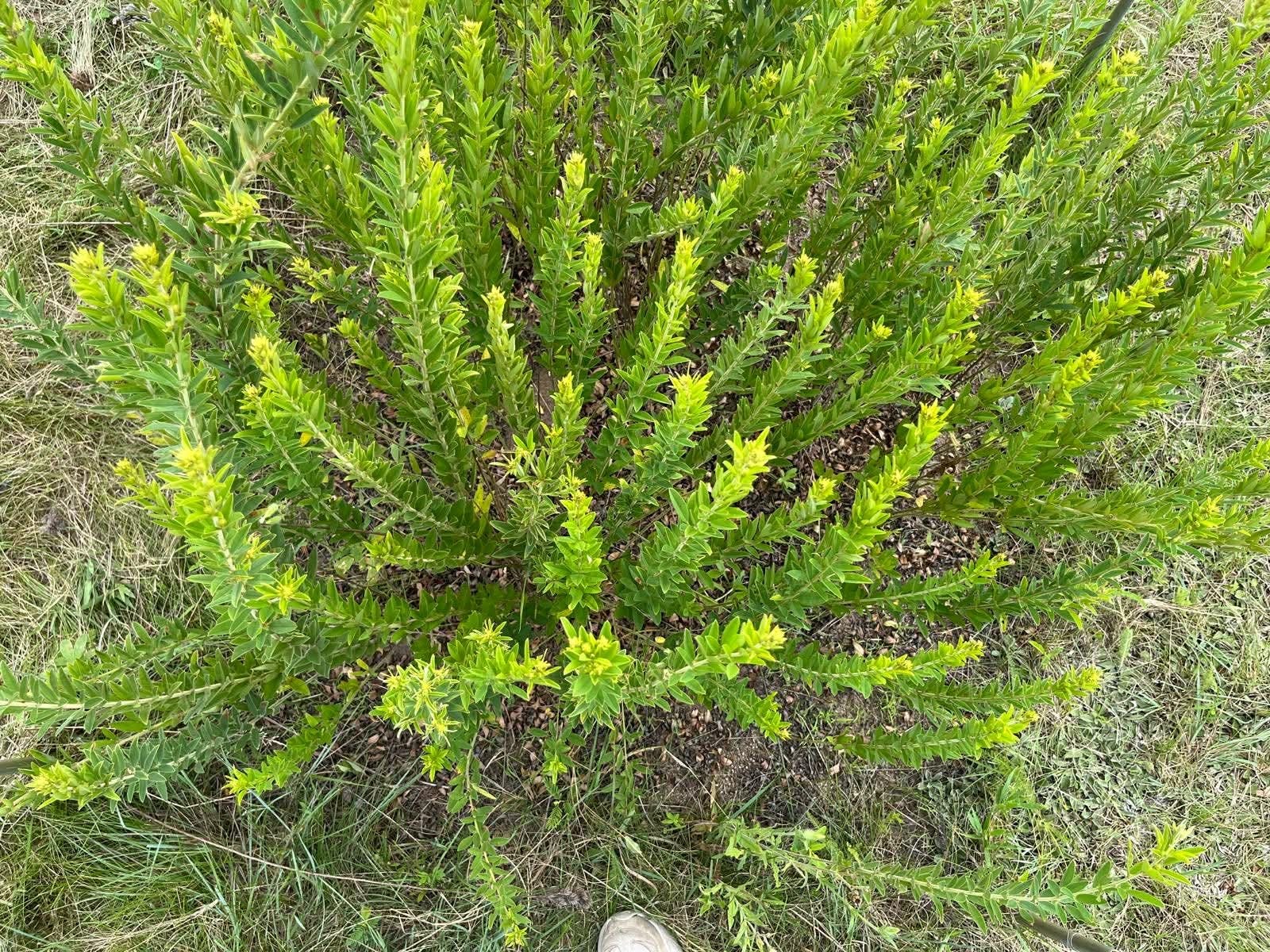
Photo: Jane Catford

Darwin’s naturalisation conundrum has long puzzled ecologists. Two competing ideas – preadaptation and limiting similarity – offer contrasting explanations for why some introduced species thrive while others fail. 

The former suggests that invaders succeed when they resemble native species, benefiting from shared traits suited to local conditions. The latter argues that similarity breeds competition, so success favours difference. Both sound plausible, yet evidence has remained inconsistent.

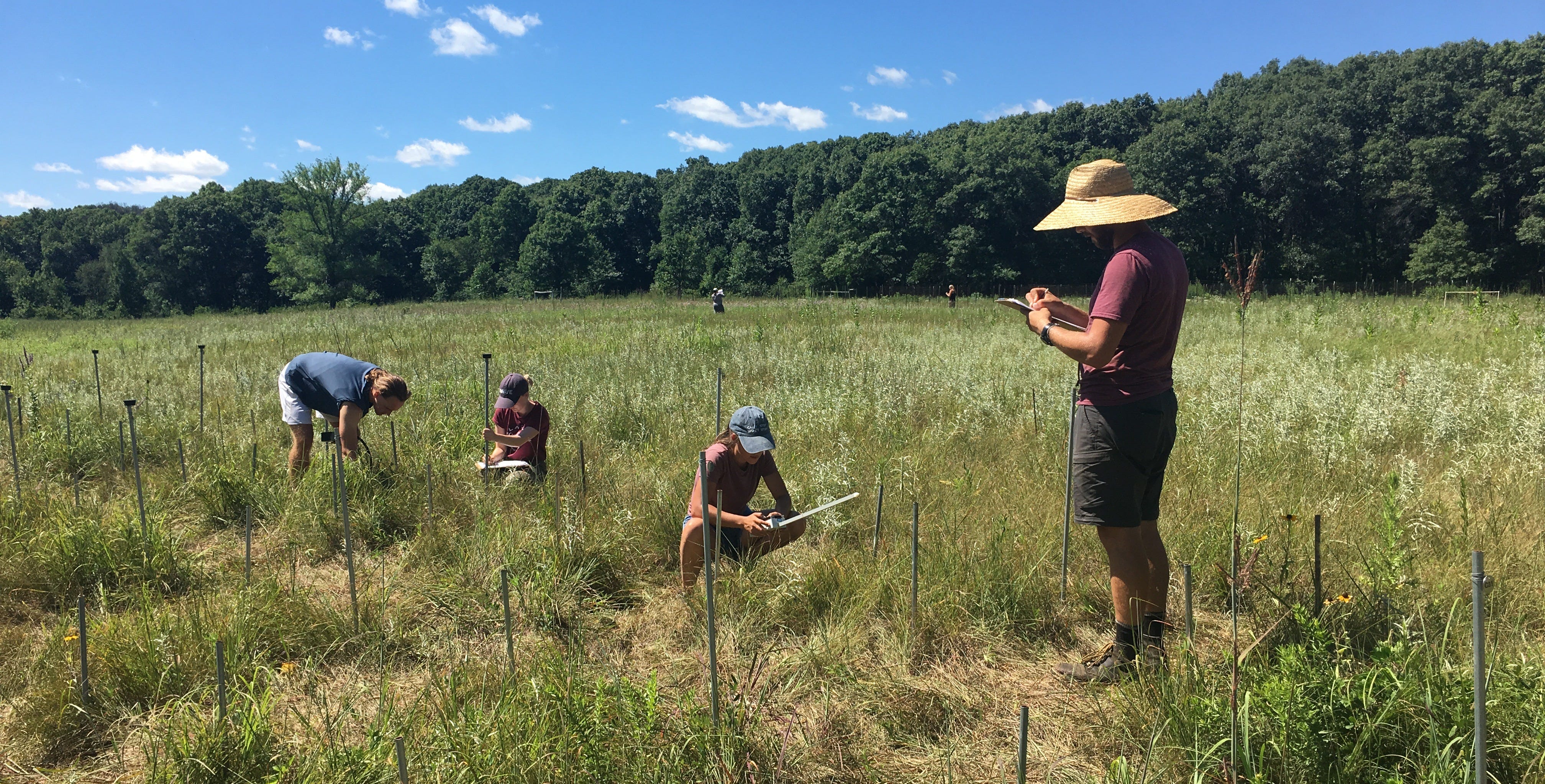
A recent study led by Maria Perez-Navarro and colleagues at King’s College London sheds light on why. The team examined 33 years of grassland succession data in Minnesota, testing these hypotheses at two unusually fine spatial scales: neighbourhood plots of 0.5 m² and site transects of 40 m². This methodological choice proved decisive.

At the neighbourhood scale, where plants interact directly, practical features such as height and leaf structure mattered most. Species that differed in these traits were more abundant, supporting the limiting similarity hypothesis. Competition, it seems, rewards difference. Yet at the larger site scale, environmental filtering dominated. Here, species more similar to the community – those sharing traits suited to local conditions – were favoured, aligning with preadaptation.

Intriguingly, evolutionary closeness told a different story. Introduced species that were close to natives in the “family tree” thrived at both scales, reinforcing preadaptation even where trait-based analyses suggested otherwise. This disconnect between evolutionary lineage and physical features highlights a key insight: these two measures are not interchangeable.

The study also revealed nuanced differences between native and introduced species. Introduced plants tended to prosper with lighter seeds, higher leaf dry matter content, and in nitrogen-rich soils, suggesting distinct strategies for colonisation and resource use.

What does this mean for invasion ecology? First, spatial scale matters – profoundly. Analyses at tens of metres, often deemed “local”, may obscure competitive dynamics evident only at sub-metre scales. Second, relying on a single measure of similarity risks misleading conclusions. Evolutionary relationships and practical traits capture different dimensions of ecological reality.

Beyond its technical findings, this research invites reflection on how ecological theory grapples with complexity. Darwin’s conundrum endures not because the underlying hypotheses are flawed, but because nature resists simple binaries. Community assembly is shaped by overlapping forces – competition, environmental filtering, evolutionary history – whose influence shifts with scale and context.

For practitioners, the message is clear: management strategies for invasive species must consider both the traits that confer advantage and the environments that filter them. For theorists, the challenge remains to integrate these insights into models that embrace, rather than flatten, ecological nuance.

In the end, the study reminds us that scale is not a backdrop but an active player in ecological processes. To understand why species succeed or fail, we must look closely – sometimes as closely as half a square metre.

Read more:

Perez-Navarro, Maria A., Harry E. R. Shepherd, Joshua I. Brian, Adam T. Clark, and Jane A. Catford. 2025. “ Evidence for Environmental Filtering and Limiting Similarity Depends on Spatial Scale and Dissimilarity Metrics.” Ecology 106(11): e70244. https://doi.org/10.1002/ecy.70244

Article originally posted on KCL’s Spheres of Knowledge
Land of 10,000 Lakes

Located on the Canadian border, smack bang in the middle of the US, Minnesota is indeed a land of many lakes. While this  postcard does sell them a bit short (there are in fact about 15,000 lakes and that doesn’t include those with more pond-like dimensions), it communicates the basic facts: there are a LOT of water bodies in this part of the world. And for someone who is partial to water, that is a pretty cool thing.

As part of my DECRA research, I am spending a couple of months in Minnesota this year.  I am planning to conduct an invasion-style experiment at Cedar Creek Ecosystem Science Reserve in 2013 and 2014, so this is the essential reconnaissance trip.

So, what have I discovered so far?

1). My University of Minnesota mentor (Dave Tilman), his lab and the Dept of Ecology, Evolution and Behavior (EEB) are all tops. Widely recognized as a place of (i.e. people that do) cutting edge ecological research, it is also proving to be a really fun and dynamic place to work.

Me obscuring a beautiful Bur Oak (Quercus macrocarpa) in sand savanna. Sand savanna now only makes up 0.00005 of its former range, so this patch of habitat is pretty precious.

To illustrate: within 10 days of arriving, I have had dinner at Dave’s house with his lab group and Simon Levin (another super high-echelon ecologist visiting from Princeton), gone to an EEB summer barbeque, spent a day out at Cedar Creek and to top it off, I’ve just returned from a “lab get-away” at the Tilman family cabin that is situated on a lake (of course!) ~3 hours north of Minneapolis. A pretty good start, I would say. 

2). A staggering amount of high quality research has taken place at Cedar Creek. Owned and operated by the University of Minnesota in cooperation with the Minnesota Academy of Science, Creek Creek is a large ecological research station that is part of the Long-Term Ecological Research Network that exists in the US. Established in 1940, Cedar Creek is located in central Minnesota and contains natural habitats that represent the entire state. To cite Nee and Lawton’s (1996) Nature paper, Cedar Creek “is rapidly becoming one of ecology’s classic localities” (p. 672). Well, not wanting to assume that I am qualified to make the call, but I would say that Cedar Creek is one of ecology’s classic localities. If you’re in any doubt, then check out the publications that have been generated from work at Cedar Creek (be prepared to scroll!).

Dave Tilman chatting to some interns who are weeding a plot of the big Biodiversity Experiment at Cedar Creek

Like all things that work well, the strength of Cedar Creek comes down to its workforce. 24 Faculty members work at Cedar Creek, as well as 15 support staff, 10s of postdocs and postgrads and even more summer interns. This summer there are about 60 people working at Cedar Creek and – in two days time – I’ll be one of them. Yippee!


3). As an upshot of (1) and (2), some incredibly exciting opportunities are available for my research. I can take a fresh look at past experiments and surveys, tweak experiments that are already up and running and then there is the option of setting up an experiment myself. The world is most definitely my oyster – I can hardly believe my luck!

While being completely spoilt for choice is a wonderful situation to find oneself in, it does present the inevitable challenge of narrowing things down. So, in the next little while I plan to do some general reading, some Cedar Creek-themed reading, some Cedar Creek fieldwork and then a generous dose of coffee-fuelled and bike-inspired thinking. At the end of that, and the end of my two months here, I hope that some sparks will have flown, some light bulbs lit and some cool ideas arisen. Exciting times!

And now, off for a bike ride and a swim… You probably have an inkling where those activities will take place!

My ride home from work: Lake Calhourn with downtown Minneapolis in the background

Project kick-off: propagule pressure, functional traits, resource availability and plant invasion

As mentioned in a previous post, I was lucky enough to be awarded one of the inaugural ARC Discovery Early Career Researcher Awards (DECRA) late last year. I officially started my DECRA research in April, so I thought it was time that I introduce it – albeit rather briefly.

In essence, I am planning to investigate the susceptibility of native vegetation edges to alien plant invasion using quantitative and experimental approaches.  The project will contain both theoretical and applied elements and will primarily examine plant invasion through a community ecology lens (or is it community assembly through an invasion lens??!).

I’ll specifically be looking at the combined (and interactive) effects of species traits, resource availability and propagule pressure on invasion success using Bayesian meta-analysis, causal modelling and a field experiment.  As stated in my grant application, “disentangling effects of alien species’ seed supply, high resource availability (light, water, nutrients) and species’ traits on invasion will indicate their relative influence on plant invasion and community assembly.  As a result, new knowledge will be gained on the efficacy of invasive species prevention and control by indicating which invasion pathways to target, and under what conditions.”

The project will run for three years and I’ll be splitting my time between Australia and the US to achieve it. The plan is to work with CEED/NERP folk on the more quantitative aspects of the project while in Australia (principally with people like Brendan Wintle, Cindy Hauser, Mick McCarthy and Peter Vesk in the QAEcology group at Melbourne Uni, but also with Phil Gibbons and David Lindenmayer at the Australian National University; more on that later). I’ll conduct the experiment at Cedar Creek Ecosystem Science Reserve in Minnesota working with David Tilman.  I’m planning to spend two months at the University of Minnesota this year (July-August) and then 6 months for the following two years (roughly April-Sept/Oct).  As a lover of warm weather, an endless summer comes as an added bonus!

ARC success!

Nov 2011 – I’ve just been awarded a Discovery Early Career Researcher Award from the Australian Research Council. Over the next three years (2012-2015), I will investigate the susceptibility of native vegetation edges to alien plant invasion using quantitative and experimental approaches.  I’ll specifically be looking at the combined (and interactive) effects of species traits, resource availability and propagule pressure on invasion success.  As such, it’ll effectively be an experiment in community assembly, but one with an invasion flavour. Working with David Tilman, I’ll be conducting the experiment at Cedar Creek Ecosystem Science Reserve in Minnesota.

It is all incredibly exciting!