Neighbours Matter More Than Herbivores in Grassland Chemistry

How competition, not consumers, shapes plant chemistry
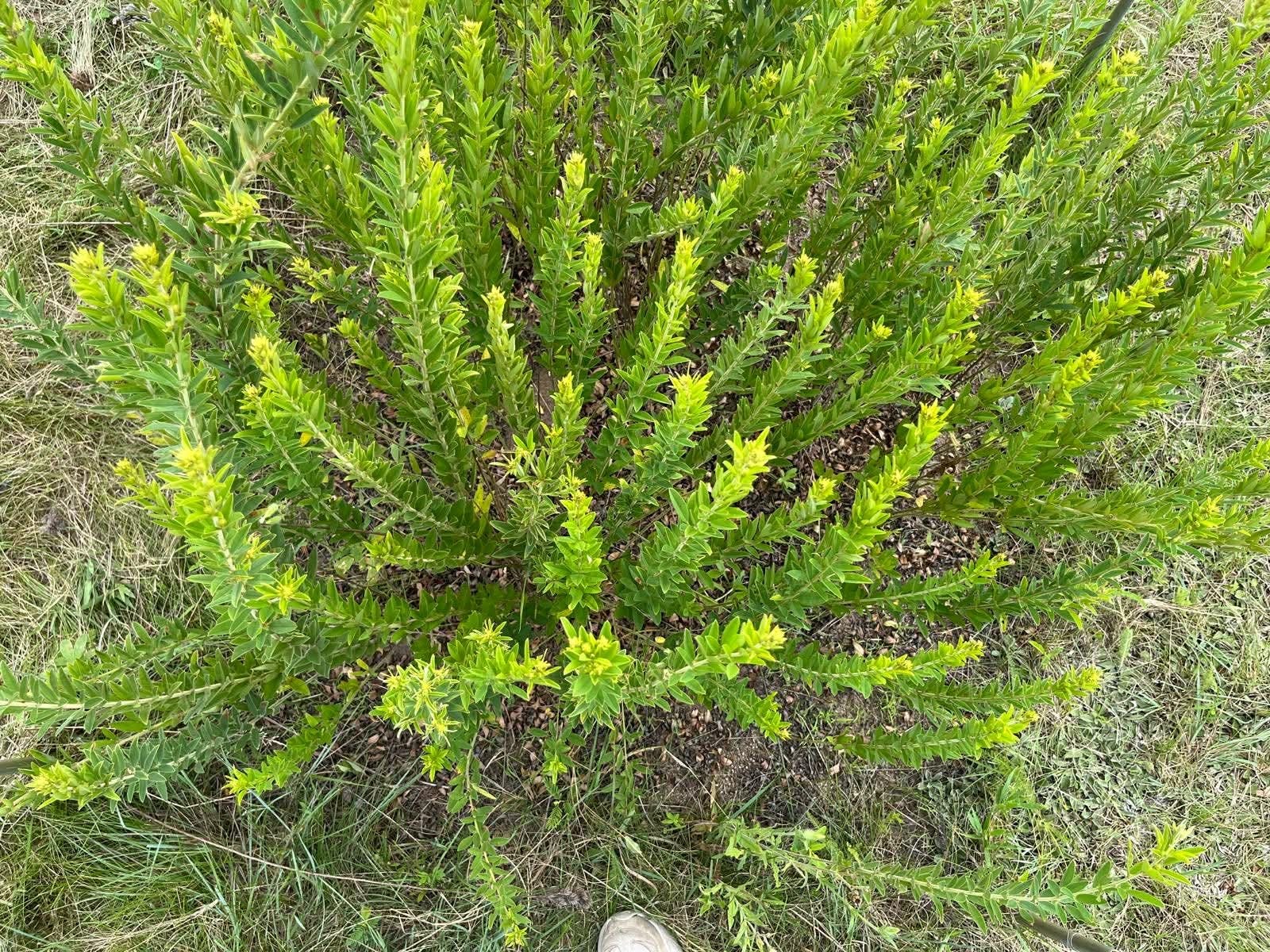
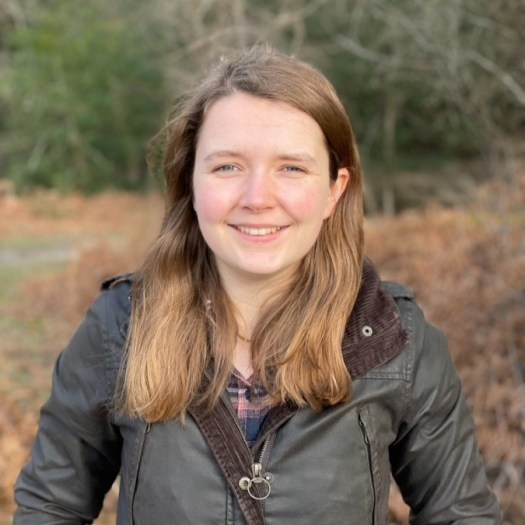
Photo: Harry Shepherd

Plants are chemical powerhouses.

They make a huge range of chemicals. Some help them grow, others protect them from pests or stress. For years, scientists have thought these chemicals mainly evolve because of herbivores and diseases. But new research suggests something different: the plants growing next to you might matter more than who is eating you.

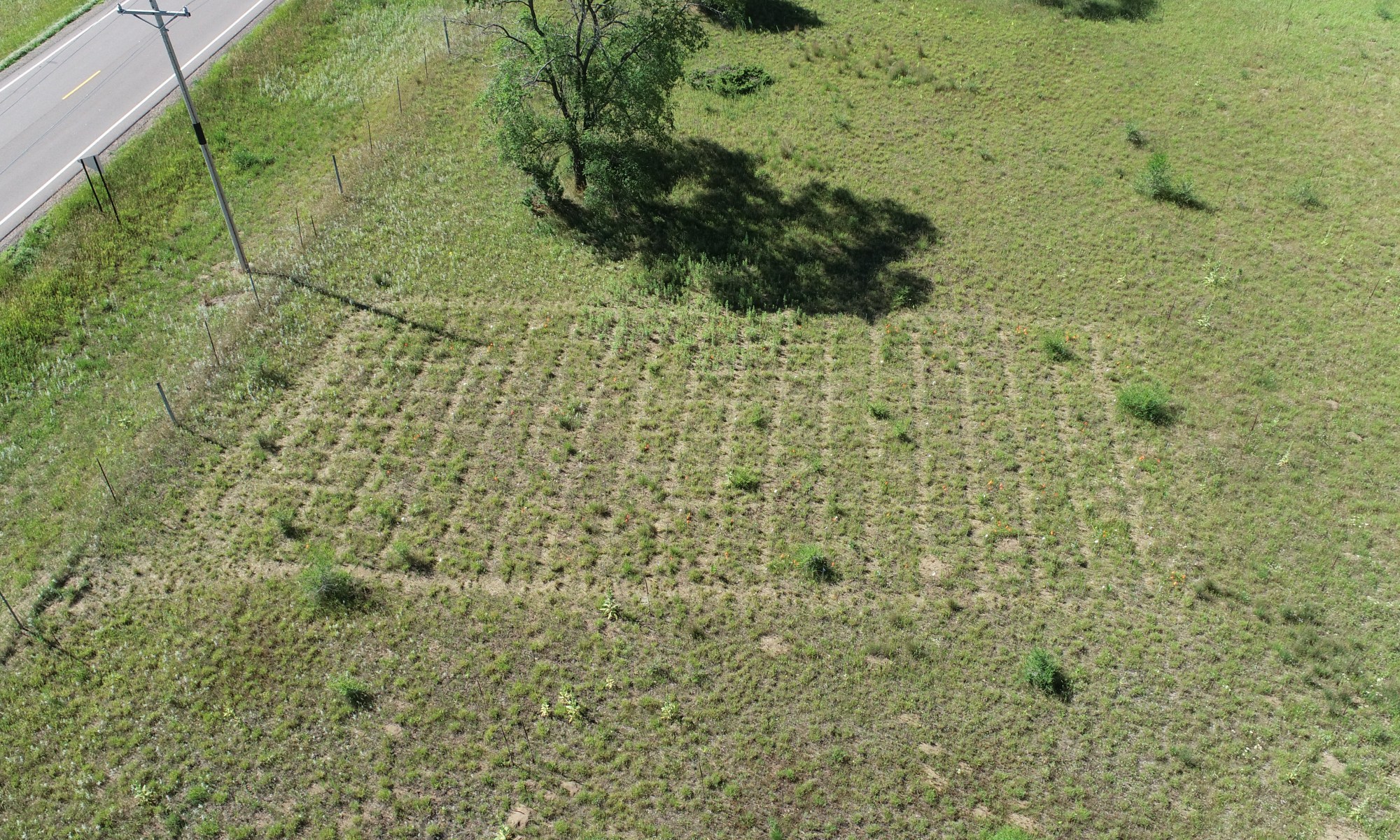
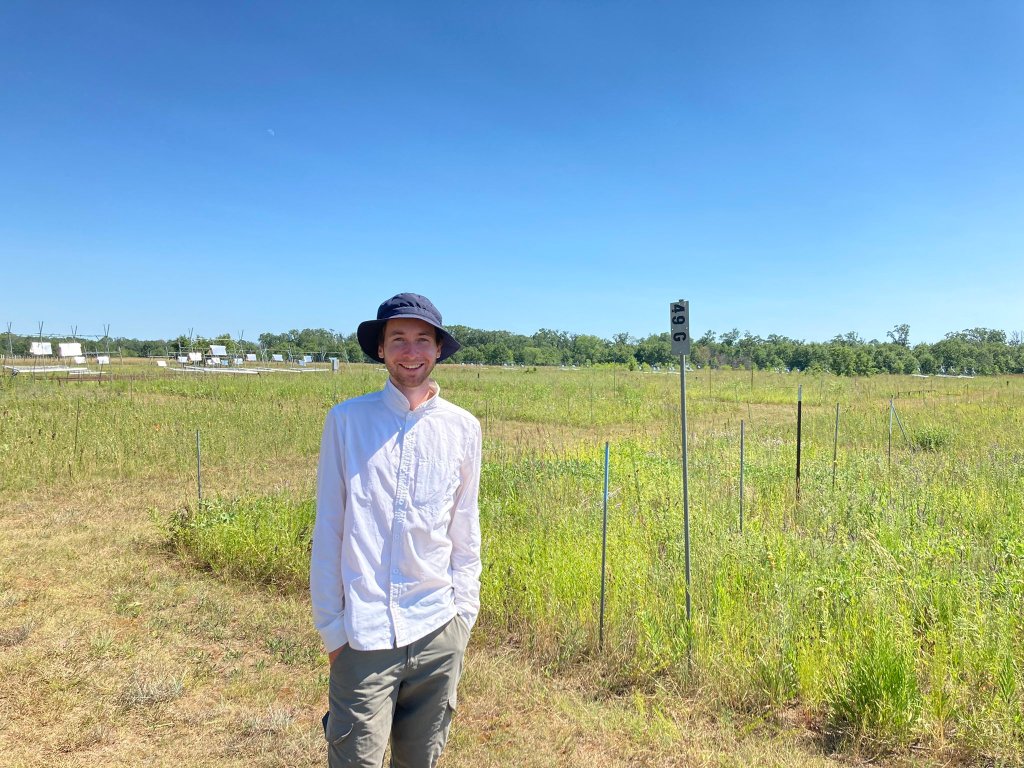
A study looked at two species in a long-term grassland experiment in Minnesota: Andropogon gerardi (also known as big bluestem, which is a tall grass) and Lespedeza capitata (roundhead bush clover; a nitrogen-fixing legume).

The team tested how these plants’ chemistry changed when they grew alone or in mixed communities, and when insect and fungi enemies were either present, or reduced with pesticides.

The findings were surprising. Both species grew better when pests were reduced, but their chemical make-up didn’t always change.

For A. gerardi, the chemistry stayed almost the same no matter the treatment. This suggests the grass relies on built-in defences rather than changing its chemistry when stressed.

L. capitata, on the other hand, reacted strongly to its neighbours. When surrounded by other species, it produced more amino acids and phenolic compounds – signs of stress – and less sugar. This means competition, not herbivory, was the bigger challenge.

Why does this matter?

First, it questions the old idea that herbivores are the main reason plants have such diverse chemistry. At least in the short term, who you grow next to can be more important. Second, it shows species respond differently. The grass seemed to thrive in mixed plots, while the legume struggled – both in growth and in chemical balance.

These differences could affect whole ecosystems, from nutrient cycling to how plants interact with insects.

The study also shows how complex plant responses are. Chemicals that dissolve in water and those that dissolve in fats behaved differently, and overall pest damage was low in the year studied. Even so, the evidence points to neighbours as key drivers of chemical change.

For ecologists and land managers, predicting how plants respond to climate change and biodiversity loss means looking beyond herbivores. As plant communities shift, their chemistry will shift too – and that could change how ecosystems work.

Future research should test more species and sample over time to catch short-term changes. For now, this study offers a simple lesson: in the chemical lives of plants, competition can matter more than consumption.

Read more:

Joshua I Brian, Adrien Le Guennec, Elizabeth T Borer, Eric W Seabloom, Michael A Chadwick, Jane A Catford, Plant neighbours, not consumers, drive intraspecific phytochemical changes of two grassland species in a field experiment, AoB PLANTS, Volume 17, Issue 6, December 2025, plaf071, https://doi.org/10.1093/aobpla/plaf071

Article originally posted on KCL’s Spheres of Knowledge
When Scale Shapes Ecological Truths

Rethinking Darwin’s Naturalisation Conundrum through Spatial Lenses

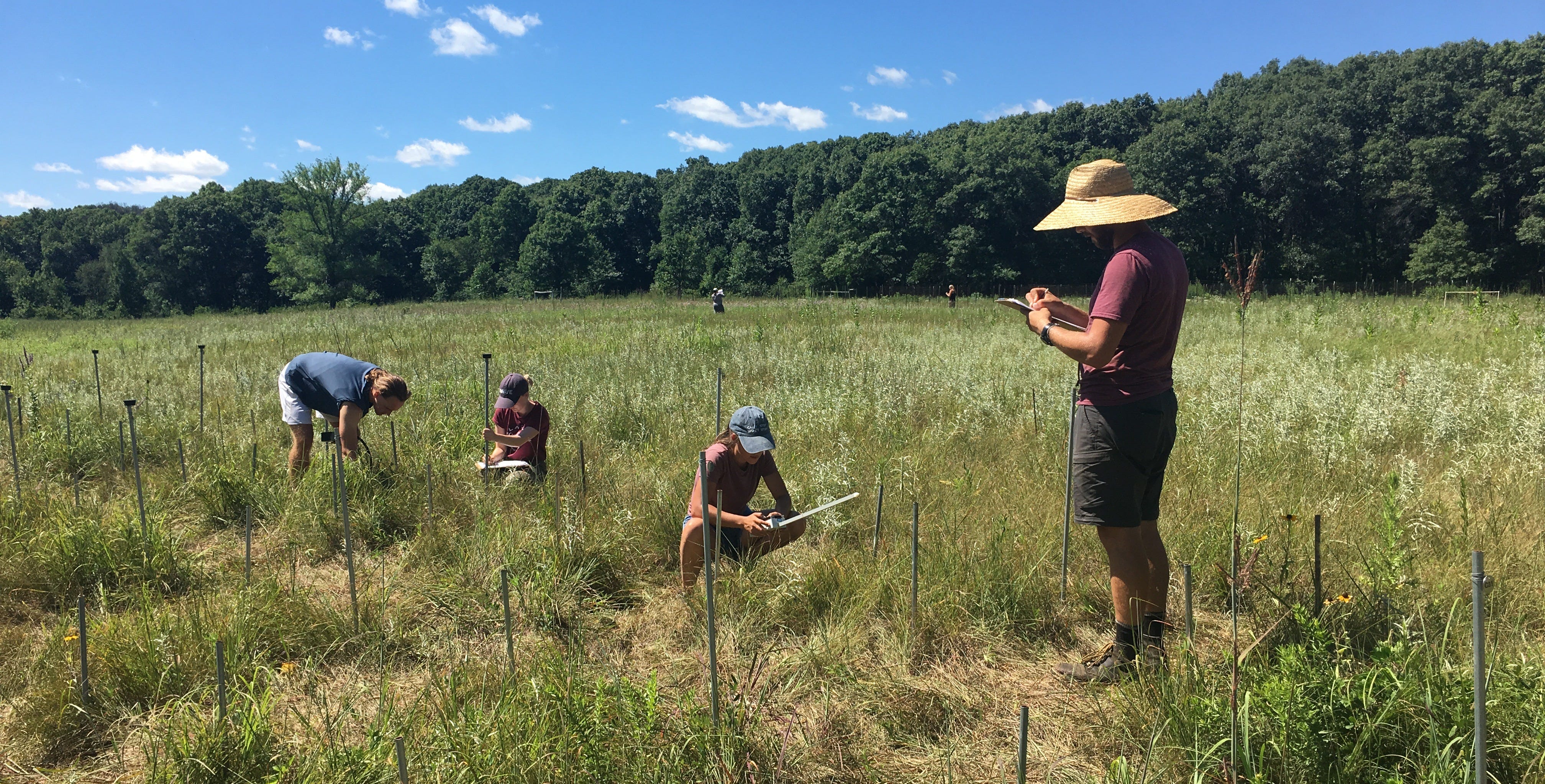
Photo: Jane Catford

Darwin’s naturalisation conundrum has long puzzled ecologists. Two competing ideas – preadaptation and limiting similarity – offer contrasting explanations for why some introduced species thrive while others fail. 

The former suggests that invaders succeed when they resemble native species, benefiting from shared traits suited to local conditions. The latter argues that similarity breeds competition, so success favours difference. Both sound plausible, yet evidence has remained inconsistent.

A recent study led by Maria Perez-Navarro and colleagues at King’s College London sheds light on why. The team examined 33 years of grassland succession data in Minnesota, testing these hypotheses at two unusually fine spatial scales: neighbourhood plots of 0.5 m² and site transects of 40 m². This methodological choice proved decisive.

At the neighbourhood scale, where plants interact directly, practical features such as height and leaf structure mattered most. Species that differed in these traits were more abundant, supporting the limiting similarity hypothesis. Competition, it seems, rewards difference. Yet at the larger site scale, environmental filtering dominated. Here, species more similar to the community – those sharing traits suited to local conditions – were favoured, aligning with preadaptation.

Intriguingly, evolutionary closeness told a different story. Introduced species that were close to natives in the “family tree” thrived at both scales, reinforcing preadaptation even where trait-based analyses suggested otherwise. This disconnect between evolutionary lineage and physical features highlights a key insight: these two measures are not interchangeable.

The study also revealed nuanced differences between native and introduced species. Introduced plants tended to prosper with lighter seeds, higher leaf dry matter content, and in nitrogen-rich soils, suggesting distinct strategies for colonisation and resource use.

What does this mean for invasion ecology? First, spatial scale matters – profoundly. Analyses at tens of metres, often deemed “local”, may obscure competitive dynamics evident only at sub-metre scales. Second, relying on a single measure of similarity risks misleading conclusions. Evolutionary relationships and practical traits capture different dimensions of ecological reality.

Beyond its technical findings, this research invites reflection on how ecological theory grapples with complexity. Darwin’s conundrum endures not because the underlying hypotheses are flawed, but because nature resists simple binaries. Community assembly is shaped by overlapping forces – competition, environmental filtering, evolutionary history – whose influence shifts with scale and context.

For practitioners, the message is clear: management strategies for invasive species must consider both the traits that confer advantage and the environments that filter them. For theorists, the challenge remains to integrate these insights into models that embrace, rather than flatten, ecological nuance.

In the end, the study reminds us that scale is not a backdrop but an active player in ecological processes. To understand why species succeed or fail, we must look closely – sometimes as closely as half a square metre.

Read more:

Perez-Navarro, Maria A., Harry E. R. Shepherd, Joshua I. Brian, Adam T. Clark, and Jane A. Catford. 2025. “ Evidence for Environmental Filtering and Limiting Similarity Depends on Spatial Scale and Dissimilarity Metrics.” Ecology 106(11): e70244. https://doi.org/10.1002/ecy.70244

Article originally posted on KCL’s Spheres of Knowledge

Understanding Alien Plant Invasions

Alien plants are everywhere – but not all invaders behave the same

a group of yellow flowers
Photo by Brittany Lee on Unsplash

Alien plant invasions are accelerating worldwide, posing serious threats to biodiversity and costing billions in management. A recent study – led by David Gregory as part of his Masters at King’s and in collaboration with Matt White from the Victorian government – sheds light on how these invasions unfold across landscapes and why growth form matters when predicting and managing risk.

The research, conducted in Victoria, Australia, analysed data from more than 7,600 vegetation surveys spanning five decades. It found that 69 per cent of surveyed plots contained alien species, which made up 22 per cent of all recorded plant species. Forbs (broad-leaved herbs) were the most common invaders, followed by graminoids (grasses and similar) and woody plants. Yet the patterns of invasion were far from uniform.

Using boosted regression trees – a machine-learning approach well suited to ecological data – the team modelled how environmental, biotic and human factors influence both the presence and dominance of alien plants. Abiotic conditions, particularly temperature and rainfall, emerged as the strongest drivers overall, explaining up to 76 per cent of variation in invasion risk. Summer maximum temperature was a consistent predictor across all growth forms, with occupancy rising sharply above 23°C.

Human activity also played a major role. Areas with intensive land use, such as urban centres and agricultural zones, showed the highest levels of invasion. Alien forbs and graminoids were especially prevalent in these disturbed landscapes, often reaching more than 70 per cent cover in towns and cities. Alien woody plants were less widespread but still more likely to occur in urban areas than in intact forests.

Interestingly, the relationship between vegetation cover and invasion differed by growth form. Alien forbs and graminoids were more likely to occupy sites with high vegetation cover, but their proportional cover tended to decline as native vegetation increased – a sign of strong competition. Woody invaders, by contrast, were negatively associated with woody vegetation cover, suggesting that dense tree cover offers resistance to colonisation.

Spatial predictions confirmed these trends. Alien forbs had a high probability of occurring almost everywhere, even at higher elevations, though their cover remained low in alpine regions. Alien graminoids were largely confined to lowland areas dominated by human activity, while woody invaders were the most restricted, reflecting lower seed dispersal and availability and lower habitat suitability.

A global challenge


These findings resonate far beyond Australia. Invasive alien plants are among the top five drivers of biodiversity loss globally, according to the Intergovernmental Science-Policy Platform on Biodiversity and Ecosystem Services (IPBES).

They disrupt ecosystems, alter fire regimes and threaten food security. Economic costs are staggering – estimated at more than US$400 billion annually worldwide – and rising as trade and travel expand. Climate change compounds the problem by creating conditions that favour invaders, while land-use change accelerates their spread.

Understanding invasion dynamics at scale is therefore critical for global conservation strategies.

The implications for management are clear. Maintaining and restoring native vegetation is critical to limiting alien plant dominance, particularly after disturbances such as wildfire – a growing risk under climate change. Urban expansion and agricultural intensification will likely increase invasion pressure, making strategic land-use planning essential. Grouping species by growth form, as this study does, offers a practical way to prioritise control efforts without building hundreds of single-species models.

Alien plant invasions are complex, shaped by climate, land use and ecological interactions. But by recognising both shared drivers and growth-form-specific patterns, we can design more effective strategies to protect ecosystems. Growth-form-based models provide a tractable, widely understood tool for science and policy – a step towards smarter, landscape-scale management of one of the most pressing environmental challenges of our time.

Read more:

Gregory D, White M, Catford JA (2025) Similar drivers but distinct patterns of woody and herbaceous alien plant invasion. NeoBiota 103 31–52. https://doi.org/10.3897/neobiota.103.164914

Article originally posted on KCL’s Spheres of Knowledge

Cartwheels and carpets

Dr Shepherd and Dr Mabey, University of Southampton, July 2023.

I love this pic – and love what it represents! Two stellar scientists and people marking the end of the huge challenge and journey that is a PhD. [cue lots of celebratory cartwheels]

Massive congratulations, Harry and Abbie, on graduating from your PhDs! Monumental achievement – and such a profound privilege for me to be involved in your journeys.

And on the (red) carpet front, we recently welcomed Jonathan Sutton to our group as a new PhD student.

Co-supervised by Vincent Jansen at Royal Holloway, Jonathan is a theoretical ecologist building models of community dynamics responding to invasion, other global change factors and evolutionary effects.

Jonathan has very much hit the ground running. We look forward to seeing (more!) of what he’ll get up to in the next few years.

Exciting guests and engaging science to kick off 2023

In this post, Harry Shepherd summarises some of the things that some of us have been up to recently…

Harry Shepherd's avatarAlienImpacts

A jam-packed first half of 2023 with a host of visitors and exciting science keeping us busy!

Things kicked off with Marc Cadotte visiting the lab for a month back in March. During his time with us, Marc gave a departmental seminar at KCL, along with an interactive session exploring the use of green space in cities to the Political Ecology, Biodiversity and Ecosystem Services (PEBES) group.

Adam Clark was also able to join for a few days in April to share his research to the group and work on an ongoing meta-community modelling collaboration with Jane and Laura Graham, who could only join virtually as heavy snowfall brought midland trains to a standstill!

We were then joined by Elizabeth Borer, Eric Seabloom, and Sophia Turner along with Marc for a 2-day workshop aimed at disentangling invasive species as drivers or passengers of environmental change and biodiversity…

View original post 177 more words

Beyond Triffids: Plants without Prejudice – collaboration with artist Léonie Hampton

We’re excited to welcome Léonie Hampton from the artist collective Still Moving to our group and department for a 6-month artist residency.

Together, we will develop a project exploring perceptions of human and plant “nativeness” to perceive ourselves in relation to biodiversity and climate crises. 

Activate from the series 'Beyond Triffids: Plants without Prejudice' 2023 by Léonie Hampton.

 Activate from the series ‘Beyond Triffids: Plants without Prejudice’ 2023 by Léonie Hampton.

Beyond Triffids: Plants without Prejudice

Invasive alien species are recognised as one of the greatest threats to global biodiversity, their invasion facilitated by, and compounding impacts of, climate change.  Within ecology and conservation biology there is a heated debate about whether alien plant invasions are good or bad for biodiversity. Do human-introduced alien species increase diversity and compensate for native species loss? Or are alien plants a major threat to biodiversity, warranting active management and restrictions on trade and travel?

Through the lens of alien plants we will particularly focus on perceptions of “nativeness” – both human and plant. Our interdisciplinary approach – co-created between arts, science and humanities – will challenge and interrogate understandings and value judgements, and how these values may need re-evaluation in light of biodiversity loss and migration.

Just as speculative fiction creates the potential, far off in space, where we might see ourselves more clearly, this creative collaboration will work with the perceptions and values of plants to perceive ourselves in relation to our urgent biodiversity and climate crisis.  


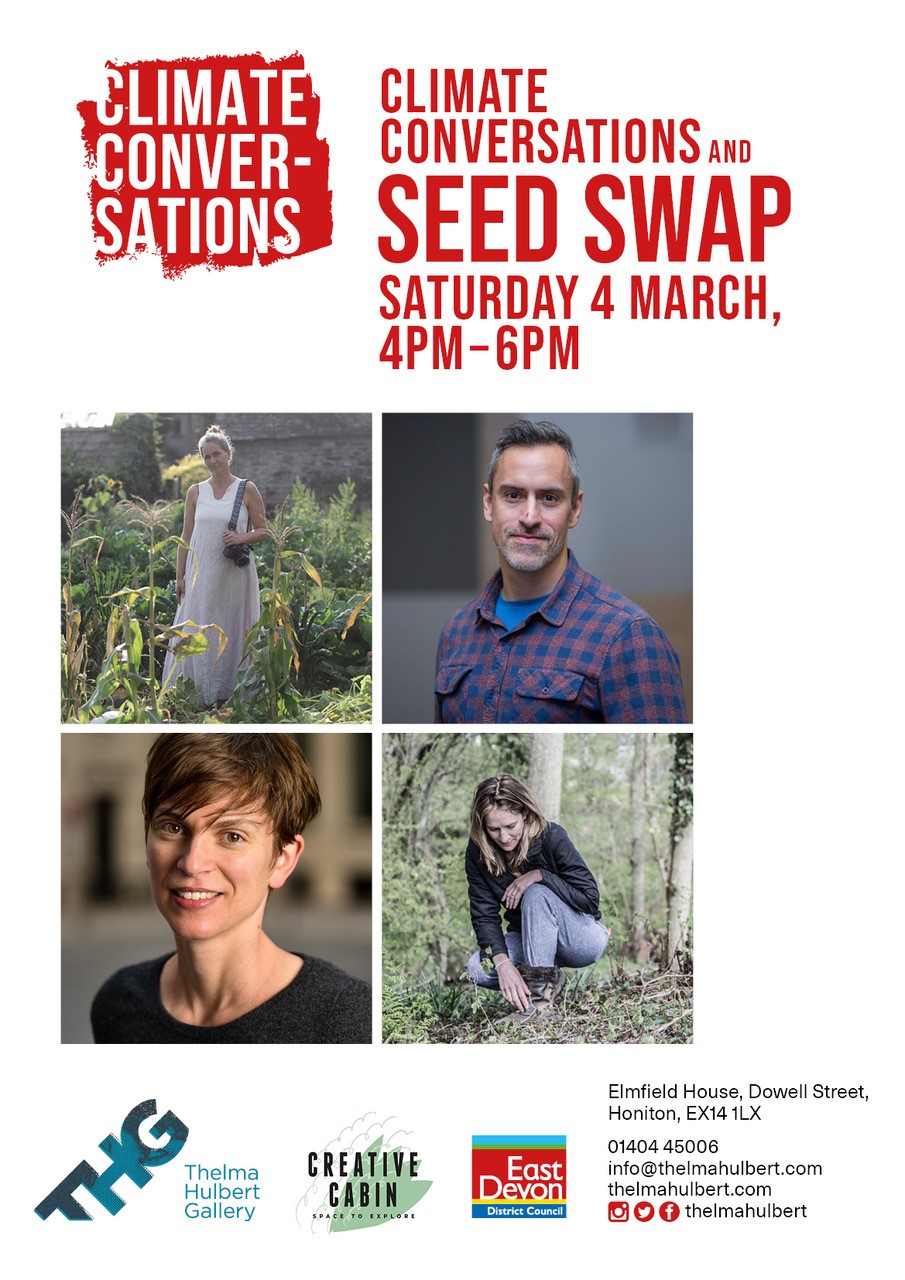
Our first public outreach event through this collaboration will be held at the Thelma Hulbert Gallery in Honiton on 4 March: Climate Conversations & Honiton Seed Swap. This will take place on the final day of Léonie’s exhibition “A Language of Seeds“.

The residency is funded by King’s Culture and supported by our ERC project AlienImpacts. More about this collaboration and five others supported by King’s Culture can be found here.

Congratulations, Dr Mabey! Congratulations, Dr Shepherd!

In some very exciting news, Abbie and Harry both completed their PhDs this year. Waahoo! Massive congratulations to both of them!

PhDs are always a monumental feat (as signified by the change in title; those two little letters, “D” and “r”, represent a ridiculous amount of work) – and Abbie and Harry both did stellar jobs, producing very interesting and important bodies of work.

Abbie’s thesis centred on Investigating the role of traits in species invasiveness in marine and terrestrial ecosystems. She’s published two papers from her PhD already (here and here) with another two nearing the end of their journeys (watch this space!).

Abbie is now working as a Carbon Rating Scientist at BeZero and loving it!

Harry’s thesis was about Peatlands on the mend: using plant-microbe interactions to restore peatland structure and function. One of Harry’s papers is already out (here), with others to follow.

Since finishing, Harry has joined the AlienImpacts team as a postdoc at KCL (we’re delighted!). He spent his first month setting up plots for species monocultures at Cedar Creek Ecosystems Science Reserve in the US. Warm work but a nice change from the final throes of a PhD!

It’s always a little sad when students finish up, but it was fantastic (and incredibly gratifying) to see what they achieved and I am very excited about what they will do next. It was an absolute privilege co/supervising both of them, so I thank them for the experience and all they taught me.

Abbie’s PhD papers to date:

  • Mabey, A.L., Catford, J.A., Rius, M., Foggo, A., & Smale, D.A. (2022). Herbivory and functional traits suggest that enemy release is not an important mechanism driving invasion success of brown seaweeds. Biological Invasions, 24: 3919-3934. link
  • Mabey, A.L., Parvizi, E., & Fraser, C.I. (2021). Pathogen inferred to have dispersed thousands of kilometres at sea, infecting multiple keystone kelp species. Marine Biology 168: 47. link

plus other ones:

  • Enders, M., Havemann, F., Ruland, F., Bernard-Verdier, M., Catford, J.A., Gómez-Aparicio, L., … Mabey, A.L. … Jeschke, J. M. (2020). A conceptual map of invasion biology: Integrating hypotheses into a consensus network. Global Ecology and Biogeography 29: 978-991. link
  • Palma, E., Mabey, A.L., Vesk, P.A., & Catford, J.A. (2021). Characterising invasive species. In R. A. Francis (Ed.), Routledge Handbook of Biosecurity and Invasive Species. link

Harry’s PhD papers to date:

  • Shepherd, H.E.R., Catford, J.A., Steele, M.N., Dumont, M.G., Mills, R.T.E., Hughes, P.D.M., & Robroek, B.J.M. (2021). Propagule availability drives post-wildfire recovery of peatland plant communities. Applied Vegetation Science 24:  e12608. link

plus other ones:

  • Shepherd, H.E.R., Atherden, F.S., Chan, H.M.T., Loveridge, A., & Tatem, A.J. (2021). Domestic and international mobility trends in the United Kingdom during the COVID-19 pandemic: an analysis of facebook data. International Journal of Health Geographics 20: 46. link

A field season at Cedar Creek

In this post, AlienImpacts postdoc Josh Brian recounts some of his summer activities…

Dr Joshua Brian's avatarAlienImpacts

I have just returned from three months at Cedar Creek Ecosystem Science Reserve, an amazing field station run by the University of Minnesota. I was there to set up an experiment on the enemy release hypothesis, which states that alien species succeed because they are released from their native enemies (e.g. predators, parasites and pathogens) which limit them in their native ranges. Using sixteen different grassland species as our ‘invaders’, planted into two different community contexts and hand-treated with combinations of insecticide and fungicide, we will exploring the contexts (if any) under which enemy release facilitates invasion success.

When a photo opportunity presents itself in BigBio you are obliged to say yes!

The season was a busy one – everything adds up fast when you are trying to establish 288 plots, or hand-paint over 1500 seedlings with pesticide! But thanks to a great team of staff and interns at Cedar…

View original post 170 more words

Congratulations, Dr Fischer!

Sarah Fischer recently passed her PhD at the University of Melbourne. Her thesis was entitled “Promoting growth and regeneration of riparian trees in a degraded swamp”.

Part of the team of UniMelb, Parks Victoria and Zoos Victoria staff who built two weirs to block channelised sections of Macclesfield Creek and reengage and restore floodplain areas that support the critically endangered lowland Leadbeater’s Possum. From left: Genevieve Hehir, Fiona Ede, Sarah Fischer, Frederic Cherqui, Simon Dent, Rob James, Darcy Watchorn, Pete Poelsma. Photo by Joe Greet, 2020.

A member of UniMelb’s Waterway Ecosystem Research Group, Sarah worked at Yellingbo Nature Conservation Park in Victoria and was supervised by Joe Greet, Chris Walsh and me. Her work contributed towards our broader ARC Linkage project on “Overcoming multiple constraints to wetland forest restoration”, which we conducted in collaboration with Parks Victoria, Melbourne Water, Greening Australia and Zoos Victoria.

In an impressive effort, Sarah has already published all of her data chapters, a list of which is below.

Massive congratulations, Sarah, on completing this excellent body of research – and doing so under such trying circumstances. Fantastic work!

Sarah’s main PhD papers:

  • Fischer, S., Greet, J., Walsh, C. J. & Catford, J. A. (2021) Flood disturbance affects morphology and reproduction of woody riparian plants. Scientific Reports, 11, 16477. link (open access)
  • Fischer, S., Greet, J., Walsh, C. J. & Catford, J. A. (2021) Restored river-floodplain connectivity promotes woody plant establishment. Forest Ecology and Management, 493, 119264.link pdf
  • Fischer, S., Greet, J., Walsh, C. J., Catford, J. A. & Arndt, S. K. (2022) Riparian trees resprout regardless of timing and severity of disturbance by coppicing. Forest Ecology and Management, 507, 119988. link author accepted version

Plus two related ones:

  • Greet, J., Fischer, S. & Russell, K. (2020) Longer duration flooding reduces the growth and sexual reproductive efforts of a keystone wetland tree species. Wetlands Ecology and Management, 28, 655-666. link
  • Greet, J., Fischer, S., Walsh, C. J., Sammonds, M. J. & Catford, J. A. (2022) Restored river-floodplain connectivity promotes riparian tree maintenance and recruitment. Forest Ecology and Management, 506, 119952.  link (open access) pdf

Spring *lab* retreat

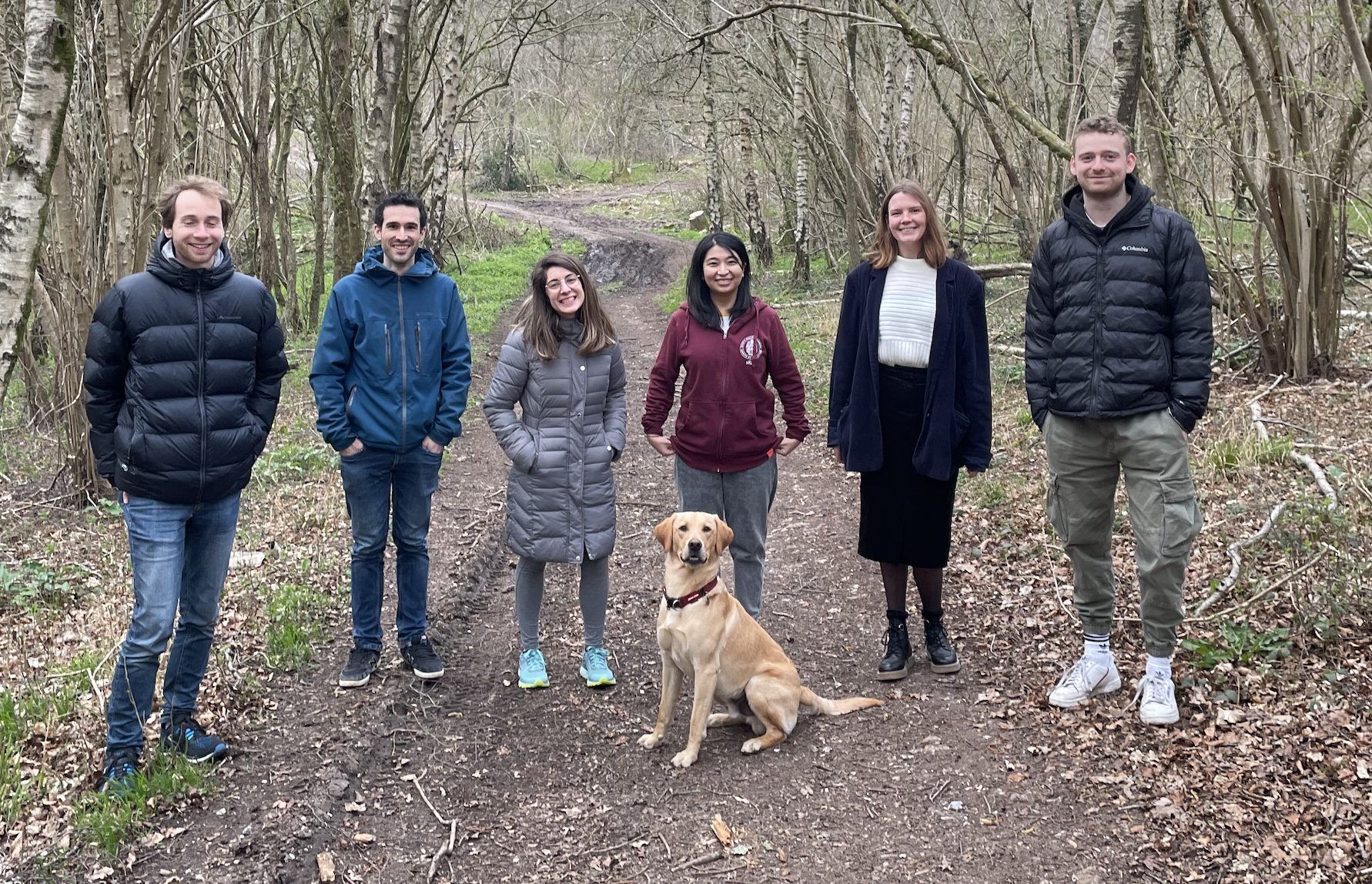
L to R: Josh Brian, Luis Moliner Cachazo, María Ángeles Pérez-Navarro, Junru Shen, Angela Bartlett, Harry Shepherd and Billy Catford, the lab lab.

Some pics from our recent lab retreat in Wiltshire – complete with research planning, writing, workshopping, communal cooking, a (tiny) blizzard, a birthday and lots of fetch! A fabulous way to spend a few days.